My Singing Pet: Pop Piano Game
- 4.7
- Rating
- 5.00M
- Installs
- Free
- Price
 Analysis by App-foxy
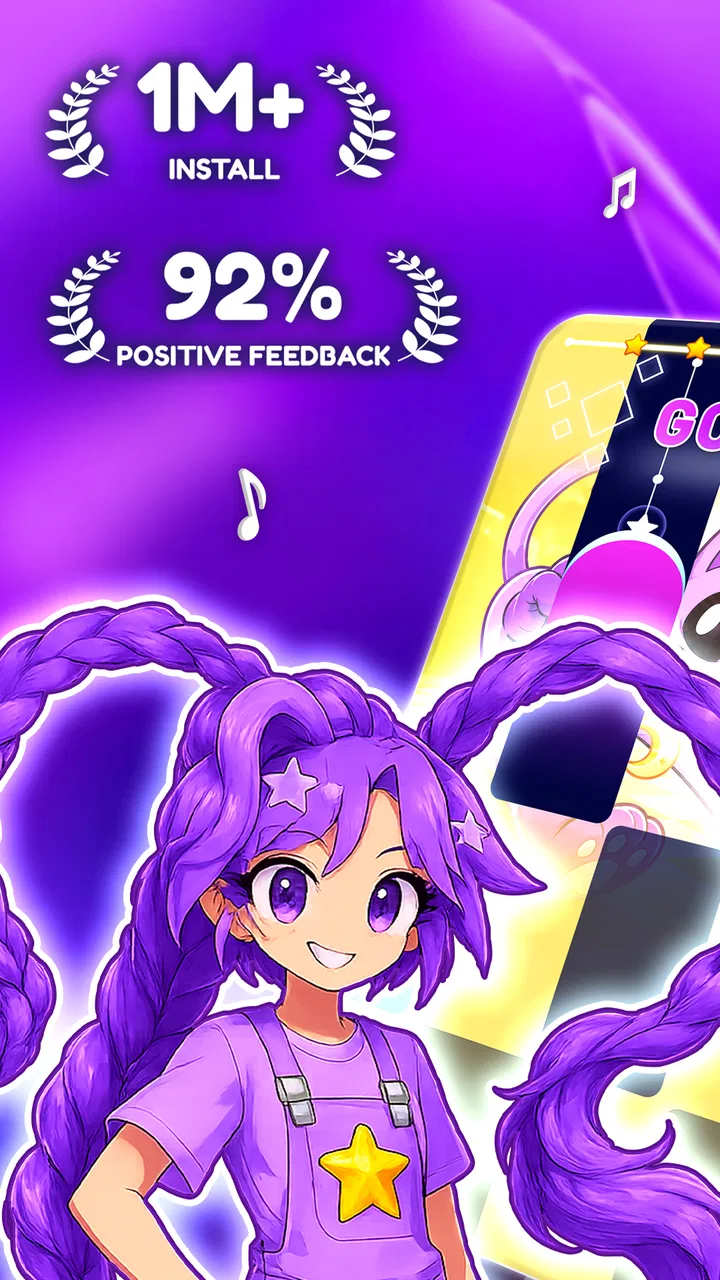
I spent time with My Singing Pet: Pop Piano Game as a light music game rather than treating it like a serious piano-learning tool. Its appeal is easy to understand: you tap along with musical patterns while building a friendly monster band, and the result is more about a pleasant rhythm than pressure or technical achievement. That makes it a comfortable choice for short breaks, especially if you enjoy cute characters and simple musical interaction.
The game comes from PulseBeat Studios and is free to play. It sits in the music category, has an Everyone age rating, and supports devices running Android 7.0 or later. The current version is 1.7.2, and the project has already passed one million installs. Those details matter because this is clearly aimed at a broad audience, not a narrow group of experienced rhythm-game players.
My overall impression is positive, but with an important qualification: the game works best when you want a calm, approachable activity. If you are looking for demanding note charts, deep composition tools, competitive leaderboards, or a structured way to learn piano, you will probably outgrow it quickly. If you want a gentle musical toy that is easy to pick up, its design makes much more sense.
You May Also Like

 Blood Strike: 2.5 Anniversary
Blood Strike’s Loadouts Turn Every Drop Into a Tactical Gamble
A close look at Blood Strike’s custom loadouts: how fast access to signature weapons reshapes its battle royale rhythm, rewards preparation, and narrows the gap between fights.

 Pandora - Music & Podcasts
Pandora’s Music Is Easy to Start, but Harder to Recover
Pandora’s strength is its low-effort path from a seed to a station. Its weak spot is how much confidence it asks you to place in connection, setup, and quiet recovery.

 8 Ball Pool
 Is Built on Rivalries, Rematches, and Routine
A close look at the rivalries, rematches, shared routines, and unanswered safety questions that turn a quick pool match into a persistent mobile community.

 Samsung Music
’s Quiet Strength Is Playing What You Already Own
Its reach comes less from spectacle than from dependable access to a personal library. That simplicity is both the app’s strongest retention engine and its ceiling.

 AccuWeather: Weather Radar
AccuWeather Review: A Quick, Clear Forecast for Everyday Decisions
For everyday plans, the best forecast is the one you can understand quickly. AccuWeather makes rain timing, radar, and local conditions easy to act on, with a few trade-offs.

 Hill Climb Racing
Why Hill Climb Racing Still Turns Crashes Into One More Run
A tiny car, a bumpy hill and one more upgrade: Hill Climb Racing keeps resurfacing because its simple chaos makes every near-miss feel personal.
More From Our News Desk



How the interface feels to read and navigate
I found the interface easiest to approach when I treated it as a small music space rather than a menu-heavy game: the monster-band presentation gives the screen a clear purpose, while the simple rhythm focus helps me decide quickly whether I want to play. That clarity matters most during a short break, when I do not want to spend the first few minutes figuring out where to go. It also sets up the next question: how that straightforward presentation feels once the tapping begins.
A friendly presentation that keeps the first steps simple
The visual direction is one of the strongest parts of the experience. The monster-band idea gives the game a clear identity, and the cute presentation makes the first interaction feel less intimidating than many rhythm games. I never felt that I needed to understand a complicated musical system before starting. The basic promise is visible in the way the game presents itself: make music, meet charming companions, and enjoy the rhythm.
That simplicity is useful for younger players and for anyone who does not normally play music games. A person can approach it without knowing terms such as tempo, measure, chord, or syncopation. The game communicates through its playful theme rather than through a dense collection of technical labels. In my experience, that lowers the mental effort needed to begin.
Navigation also benefits from the narrow focus. There are not many different kinds of activity competing for attention, so the experience feels more like entering a small musical space than managing a large game hub. That is helpful when I want something I can open during a short pause and understand almost immediately.
Where readability could matter more
The same cheerful visual style can become less comfortable for some players. Bright colors, animated characters, and movement may help the game feel lively, but they can also make it harder to concentrate on the actual rhythm cues. Players who need strong visual separation may prefer to use a larger screen or reduce distractions in their surroundings rather than playing while multitasking.
I would also avoid assuming that a cute interface is automatically accessible. Friendly artwork does not tell me whether every label, button, or timing cue will be equally clear to every person. Someone with low vision, color-vision differences, or difficulty tracking moving objects should test the game personally and pay attention to whether the important prompts remain distinguishable.
For a child, the visual language is inviting. For an adult who prefers restrained interfaces, it may feel overly busy. That is not a flaw for everyone, but it is a genuine preference trade-off. The game’s personality is part of its appeal, and that personality may be less suitable for people who want a quiet, minimal screen.
Learning the flow without feeling lost
One practical strength is that the game does not present itself as a traditional instrument simulator. I did not approach it expecting a keyboard layout, realistic fingering, or lessons that build toward independent piano playing. That distinction helps set the right expectations. The interaction is playful and guided, so beginners can participate without feeling judged for not having musical experience.
For families, this can make shared use easier. A parent can hand the game to a child without first explaining music theory, while an older player can enjoy the same songs as a relaxing diversion. The main limitation is that the simplicity leaves less room for people who want to customize the learning path. It is easy to enter, but there is not the same sense of a long-term curriculum that I would expect from a dedicated educational app.
Motor and sensory considerations during play
The central physical demand is timing. You need to notice the cue and respond with a tap, so the game is more accessible to someone comfortable with touch interaction than to someone who finds repeated screen taps tiring or imprecise. The forgiving, casual tone helps, but rhythm still depends on a basic connection between seeing, hearing, and touching.
This creates different experiences for different players. Someone with limited fine-motor control may find a simple rhythm sequence manageable if the targets are large and the pace feels comfortable, but I would not assume that every section will be equally easy. A player with tremors, reduced reach, or difficulty making quick repeated movements may need to hold the device differently, use a stable surface, or take frequent breaks.
Hand position makes more difference than I expected. When I held the device with one hand and tapped with the other, I had better control than when I tried to play while walking or balancing the phone awkwardly. That leads to a useful everyday tip: treat it as a seated game when possible. A stable posture improves accuracy and reduces the chance that a missed note is caused by the device moving rather than by the player missing the rhythm.
Players who are sensitive to sound should approach the audio carefully. The music is central to the experience, but enjoying it does not require turning the volume high. I found that a moderate level was enough to follow the beat in a quiet room. In a noisy environment, however, the sound cues can become harder to separate from background noise, which makes the game less relaxing and may encourage uncomfortable volume levels.
Why the musical design helps some players
The game’s strongest sensory quality is its combination of visual charm and musical feedback. When the timing feels natural, the interaction is satisfying without demanding the concentration of a difficult arcade title. That can work well for a short decompression ritual after work or school. I can imagine using it for a few minutes while waiting for an appointment, provided I am somewhere the sound and screen will not be distracting.
It may also suit players who are curious about rhythm games but feel put off by competitive presentation. Many alternatives emphasize high scores, difficult charts, or rapid progression. This one feels more welcoming because the monster-band theme softens the sense of failure. A missed input is easier to treat as part of a playful session rather than proof that I am not good at music games.
There is a trade-off, though. People who depend heavily on audio cues may find that visual attention is still important, while people who rely primarily on visual prompts may find background sound essential to the intended experience. The game is built around these senses working together, so it is not the ideal choice for someone who needs one channel to replace the other.
Using it in real-life situations
In a quiet room, the game is at its most comfortable. I can focus on the beat, keep the phone steady, and enjoy the characters without rushing. It also works during a brief waiting period, because the concept is easy to resume mentally and does not require a long story sequence before the musical interaction begins.
Public transport is a more mixed case. Visual play is possible, but movement from the vehicle can make precise tapping less reliable. Sound may also be inappropriate or difficult to hear. If I were using it there, I would choose a stable seat, keep the volume low or use headphones, and avoid treating the session as a serious score attempt.
It is less suitable in situations that already demand attention, such as walking near traffic, supervising a child who needs immediate help, or working in a setting where music could disturb others. The relaxed tone should not be confused with a hands-free experience. You still need to watch the screen and respond at the right moment.
For shared family use, the Everyone rating is reassuring as a general age classification, but it does not replace supervision or personal judgment. A younger child may understand the tapping quickly, while another may become frustrated if the timing does not feel natural. I would start with a short session and see whether the child enjoys the musical feedback or becomes more interested in the characters than in the rhythm itself.
Remaining barriers and practical compromises
The biggest barrier is not complexity; it is the lack of certainty about whether the interaction will match a player’s particular needs. A game can be simple and still be difficult for someone who cannot comfortably distinguish its cues, tap at the required pace, or tolerate animated audiovisual feedback. That is why I would not describe it as universally accessible simply because it is rated for everyone.
Another limitation is the likely gap between casual enjoyment and sustained mastery. The game’s approachable design is excellent for lowering the entry barrier, but players who need adjustable challenge, detailed practice controls, or a more formal progression may find the experience too narrow. A dedicated rhythm game is a better choice for chart variety and precision. A piano-learning app is better for technique, notation, and measurable study. A music-making app is better for users who want to create and arrange their own pieces.
That comparison is important because “music game” covers very different expectations. I would choose this title over a competitive rhythm game when I wanted a softer mood and a character-driven presentation. I would choose a learning app instead when my goal was to improve at an instrument. The right option depends less on age or experience than on what I want the session to accomplish.
There is also a social consideration. The game’s appeal is personal and immediate, but it does not replace playing music with other people or learning an instrument together. A child may enjoy showing a parent the monster band, yet the interaction remains screen-based. For families seeking an activity that develops shared musical performance, a real keyboard, singing game, or collaborative music tool may offer more depth.
Small habits that make the experience better
I found three simple habits particularly useful. First, I played with the phone supported instead of gripping it tightly. That reduced accidental movement and made the taps feel more deliberate. Second, I used a quiet environment when I wanted to follow the rhythm rather than simply watch the animation. Third, I treated short sessions as the intended strength instead of forcing myself to continue after the novelty had faded.
Another practical approach is to separate “relaxing play” from “trying to improve.” If I focused only on perfect timing, the gentle mood became less effective. If I accepted a few mistakes and paid attention to the musical flow, the game delivered its best quality. Players who are sensitive to frustration may benefit from deciding in advance that the goal is a pleasant break, not a personal record.
For accessibility, I would make the same adjustments I would use with other touch rhythm games: choose a stable position, keep the screen at a comfortable distance, use a volume level that does not strain hearing, and stop when repeated tapping becomes uncomfortable. These are not special modes or guarantees; they are practical ways to reduce avoidable friction during ordinary play.
Who should try it, and who should skip it?
I would recommend it to someone who likes cute creatures, simple musical interaction, and games that can be enjoyed without a long commitment. It is especially appealing if competitive rhythm games feel stressful or if a traditional piano-learning app sounds too serious. The free price makes it easy to try, and the broad age rating makes it a reasonable candidate for casual family exploration.
I would be more cautious recommending it to a player who wants substantial replay depth, advanced rhythm challenges, or a clear path toward musical skill. It is also not my first choice for someone who needs highly configurable accessibility controls, relies entirely on audio or visual feedback, or finds animated screens and repeated tapping uncomfortable.
The public response is encouraging: the game holds a 4.8 average from around nineteen thousand ratings, with more than a million installs. Those figures suggest that its approachable formula has found a sizeable audience, although popularity cannot tell me whether its sensory presentation or tapping demands will suit a particular player.
My inclusive verdict
My Singing Pet: Pop Piano Game succeeds because it understands the value of a low-pressure musical moment. The monster-band theme gives the experience warmth, the rhythm interaction is approachable, and the free entry point removes much of the risk involved in trying it. PulseBeat Studios has made something that feels more like a cheerful musical toy than a demanding game, and that is exactly why it can work so well for casual players.
Its inclusive appeal is real but limited. The Everyone rating and simple presentation make it inviting, yet players still need to see the cues, hear or otherwise follow the musical timing, and tap the screen with reasonable comfort. The game does not become accessible to every person merely by being cute and easy to start. A stable setup, moderate volume, and short sessions can help, but they cannot solve every individual barrier.
I would keep it installed for relaxed breaks and recommend it to friends who want a friendly introduction to rhythm games without competitive pressure. I would not present it as a replacement for piano lessons, a full music-creation tool, or a deeply customizable accessibility-focused game. Its best use is a small, cheerful rhythm experience that welcomes beginners while remaining honest about its narrow scope.
With its July 13, 2025 release and current 1.7.2 version, it is a straightforward choice for Android users on version 7.0 or newer who want free musical play rather than formal instruction. If that matches your goal, My Singing Pet: Pop Piano Game is easy to recommend. If your priority is precision training, intense challenge, or extensive control over how the game communicates, I would look at a more specialized alternative instead.
FAQs for My Singing Pet: Pop Piano Game
01What is My Singing Pet: Pop Piano Game?
My Singing Pet: Pop Piano Game is an interactive music app where users can create delightful tunes using a virtual keyboard. The app features adorable pet characters that sing along as you play, offering a fun and engaging way to learn music and improve your piano skills.
02Is My Singing Pet suitable for all ages?
Yes, My Singing Pet is designed to be family-friendly and suitable for all ages. The app’s intuitive interface and playful graphics make it accessible for children, while the challenging levels can also engage adults who are interested in music and rhythm games.
03What platforms is My Singing Pet available on?
My Singing Pet is available for both Android and iOS devices. You can download it from the Google Play Store or the Apple App Store. Make sure your device meets the minimum system requirements for a smooth gaming experience.
04Are there in-app purchases in My Singing Pet?
Yes, My Singing Pet offers in-app purchases. Users can buy additional features, such as new songs, pet characters, and customizations. While the app is free to download, these optional purchases can enhance the gaming experience with more content and personalization.
05Do I need an internet connection to play My Singing Pet?
No, an internet connection is not required to play My Singing Pet once it is downloaded. However, some features, such as updates or additional content downloads, might require connectivity. Playing offline allows you to enjoy the core gameplay without interruptions.
Pros
- Engaging and fun music-based gameplay.
- Varied song library for all tastes.
- User-friendly interface for easy navigation.
- Regular updates with new songs.
- Customizable pet characters add charm.
Cons
- In-app purchases can be pricey.
- Requires internet for most features.
- Limited offline gameplay options.
- Occasional ads interrupt sessions.
- Some songs locked behind paywall.

My Singing Pet: Pop Piano Game
Gallery